The Sacred Art of Writing
Sacred Art of Writing | Doctor of Ministry
In July of 2006, Eugene Peterson delivered a lecture at the famous Tattered Cover Bookstore in Denver, Colorado, titled “What are Writers Good For?” In it, he warned against “godtalk” — insisting that “One of the characteristics of language in the land of the living is that it is personal. When we use language that depersonalizes God into an abstraction or an idea or a project, the life leaks out of what we say and write, teach and pray. We are left with nothing but godtalk.”
To avoid such a dreaded thing, he encouraged those present that day to concentrate on the language used between Sundays— when and where writers have a high calling “not to tell people what words mean, but to awaken their imaginations so that they see and experience words at work.”
Our world needs brave and imaginative writers who recognize the holiness of words, who resist ugly, manipulative, commodified language, and who string together sentences that carry weight andbeauty. We need tenacious writers who avoid “godtalk”—who will honor their sacred task, in service to the God who is wholly other and yet shockingly human and write words that ignite fire and hope rather than enraging with their triviality.
The Sacred Art of Writing Cohort welcomes established and emerging writers in multiple genres and contexts to think deeply, theologically, and artfully about their work.
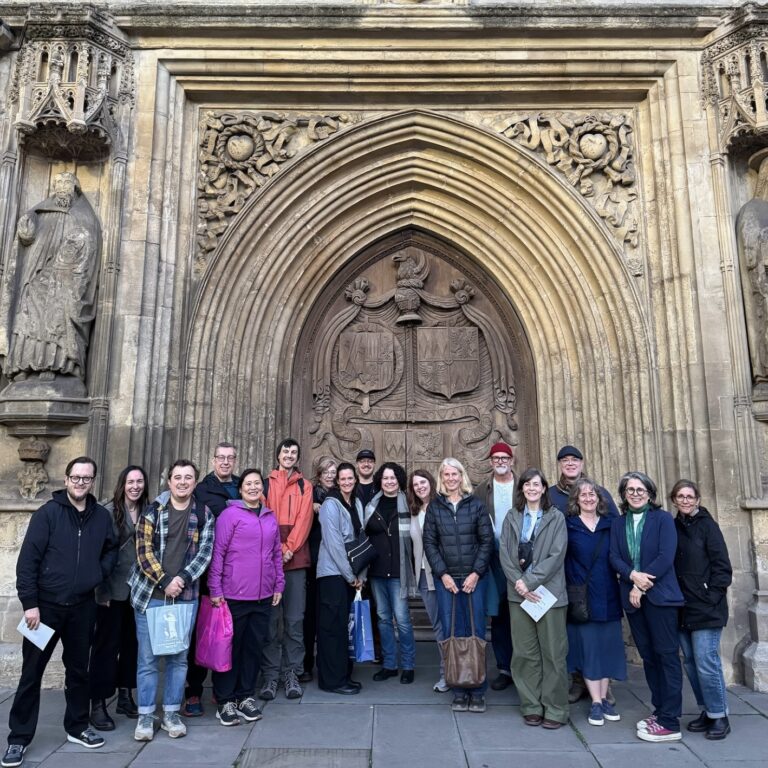
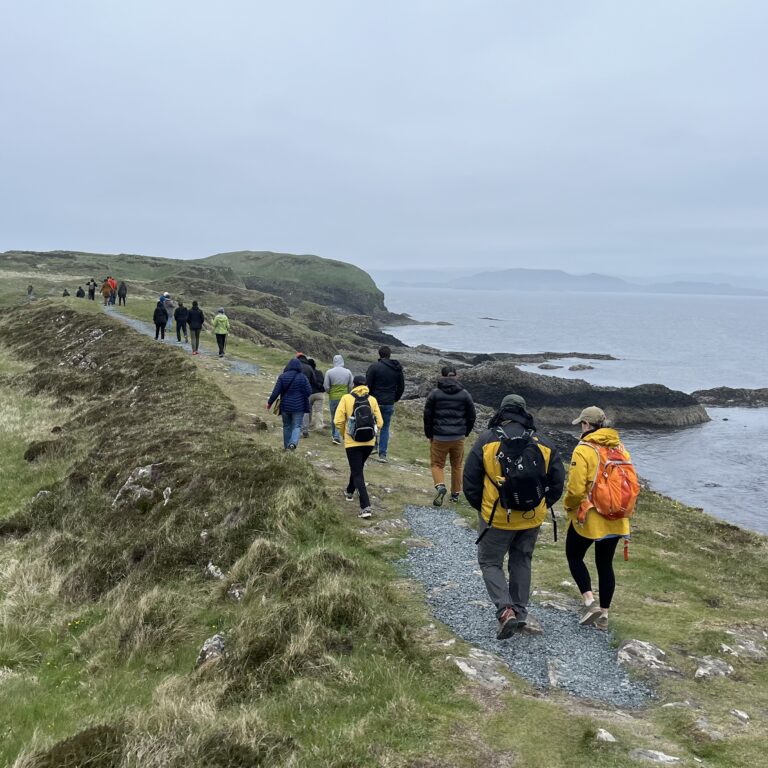
The Sacred Art of Writing is a three-year program with two weeks of in residence per year (for a total of 6 residencies). Four times, our cohort will meet on the WTS campus in Holland, Michigan. The other two residencies will be offsite (a literary pilgrimage to Ireland and/or the UK and a writing retreat). All travel and lodging expenses are the student’s responsibility.
Note: The DMin is a ministry degree and uniquely seeks to form people in lives of service to God, the church, and the world. As such, the Sacred Art of Writing program is distinct from an MFA. We will tend to craft as one essential thread, but also to theological and spiritual themes inherent in this vocation and essential for the life and soul of the writer. Perhaps the most crucial and formative element of our cohort will be the space itself, how we enter as a community listening to God and to one another among all the words we share.
If you would like to be put on the waiting list to be notified when the next cohort opens for applications, please use the “Request Information” box below and let Admissions know your request.
Next Cohort Applications Open Spring 2027
Year One: In addition to determining student projects, the first year will focus on the theological grounding for the sacred work of writing, the holiness of words, and the sacramental reality of language. As a way of emphasizing the novel, our guest lecturer will be Leif Enger. Examples of likely reading (still to be finalized) might include selections from Eugene Peterson’s Christ Plays in Ten Thousand Places, a reading packet including theologically-oriented articles, selections from Rowan Williams’ Dostoevsky: Language, Faith and Fiction (Making of the Christian Imagination), Leif Enger’s Virgil Wander, Toni Morrison’s Beloved, Emily St. J Mandel’s Station Eleven, Arundhati Roy’s The God of Small Things, Kent Haruf’s Eventide, and Marilynne Robinson’s Lila.
Year Two: Our second year will deepen themes from year one in conjunction with exploring memoir and poetry, essay and sermons. Our guest lecturer will be Sophfronia Scott. Potential reading might include a packet of theologically-oriented articles, Mary Karr’s Lit, Joan Didion’s The Year of Magical Thinking, Shulem Deen’s All Who Go Do Not Return, Dani Shapiro’s Inheritance, Deborah Feldman’s Unorthodox, St Therese of Lisieux’s Story of a Soul: The Autobiography of the Little Flower, Sarah Broom’s The Yellow House, Pat Conroy’s The Water is Wide, Fleming Rutledge’s Help My Unbelief, Samuel Proctor and William Watley’s Sermons from the Black Pulpit, Tom Kooser and Jim Harrison’s Braided Creek, and David Whyte’s The House of Belonging. Our second year will include our literary pilgrimage to Ireland and/or the UK.
Year Three: Our third year will explore the short story, while providing extended space for workshopping writing projects. Potential reading might include Zadie Smith’s Intimations, Andre Dubus’ Selected Stories, James Baldwin’s Notes of a Native Son, George Saunders’ Tenth of December, and Brian Doyle’s One Long River of Song. Our third year will include our writers’ workshop retreat.
Ongoing: We will have at least one whole-cohort meeting via Zoom between intensives. Mentors will host 1-2 Zoom gatherings with their smaller advising circle.
Writing Project: As a culminating thesis toward which they will work over the three years, students will create a writing portfolio including [1] a substantial, original literary work in their genre of choice (roughly 15,000 words) along with [2] two collected essays reflecting on theological themes connected to writing as a sacred art and on the writers’ own formation as a writer in service to God’s church and world (roughly 5,000 words each), for a total portfolio project of roughly 25,000 – 30,000 words. A final presentation from the portfolio will be presented to the project committee and cohort.
Residency Dates (Tentative)
October 2027 – Holland, MI
April 2028 – Holland, MI
September 2028 – Literary Tour
April 2029 – Holland, MI
October 2029 – Writing Retreat
April 2030 – Holland, MI

Winn Collier
Lead Faculty Member
A pastor for 26 years, Winn now serves as the Director of the Eugene Peterson Center and Associate Professor of Pastoral Theology and Christian Imagination at Western Theological Seminary. In addition to writing for The Washington Post, Christianity Today, Christian Century and numerous other outlets, he has published books in multiple genres (spiritual creative non-fiction, fiction, and biography): Let God: Spiritual Conversations with François Fénelon; Love Big, Be Well: Letters to a Small Town Church and A Burning in My Bones: The Authorized Biography of Eugene H. Peterson.

John Blase
Cohort Mentor
A former pastor, John has worked as an editor in the publishing industry for fifteen years (with David C. Cook and Waterbrook Penguin- Random House). He is a poet and creative non-fiction writer. In addition to ghostwriting for notable figures and publishing essays for numerous outlets, he has written Jubilee: The Poems; Know When to Hold ‘Em; Touching Wonder, and All is Grace: A Ragamuffin Memoir (with Brennan Manning).

Marilyn McEntyre
Cohort Mentor
A poet and essayist, Marilyn was a former professor of humanities at the UC Berkeley-UCSF Joint Medical Program and has spoken for numerous writer workshops, conferences, churches and seminaries. Marilyn is the author of When Poets Pray; Word by Word: A Daily Spiritual Practice; A Long Letting Go: Meditations on Losing Someone You Love; Drawn to the Light: Poems on Rembrandt’s Religious Paintings; Dwelling in the Text: Homes in American Fiction; A Healing Art: Regeneration Through Autobiography; Occasions: Selected Poems and other titles.

Leif Enger
Guest Lecturer
A former producer and reporter with Minnesota Public Radio, Leif is a national bestselling novelist. Leif has written Peace Like a River (named one of the Year’s Best Books by both Time Magazine and the LA Times); So Brave, Young, and Handsome and Virgil Wander.

Sophfronia Scott
Guest Lecturer
A novelist and essayist, Sophfronia has written for Killens Review of Arts and Letters, Saranac Review, Ruminate, NewYorkTimes.com, O, The Oprah Magazine and numerous other publications. She is the author of both fiction (All I Need to Get By and Unforgivable Love) and nonfiction (This Child of Faith, with her son Tain, Love’s Long Line and The Seeker and the Monk: Everyday Conversations with Thomas Merton). Winner of numerous awards, Sophfronia is the founding director of the MFA program at Alma College.
Have questions? Want to learn more about a program? Want to be notified when applications open for the next cohort?
Fill out the form, and a member of the Western Theological Seminary admissions team will reach out to you as soon as possible.